- Published on
How RiskLabAI Is Built
This subject looks at RiskLabAI as software rather than as a mathematical model. The notebooks map the public modules, show how named components are selected and replaced, and compare how the Python and Julia libraries express related purposes.
Design in practice
The public Python package groups related methods into modules and exposes stable entry points for examples and tests. Component lookup lets a caller choose a named implementation without tying every notebook to one class. The Python-Julia comparison focuses on shared intent and language-specific design; it does not claim line-for-line parity.
The architecture of the public RiskLabAI libraries
The first map follows public Python imports and entry points. The second compares the organization of the Python and Julia libraries.
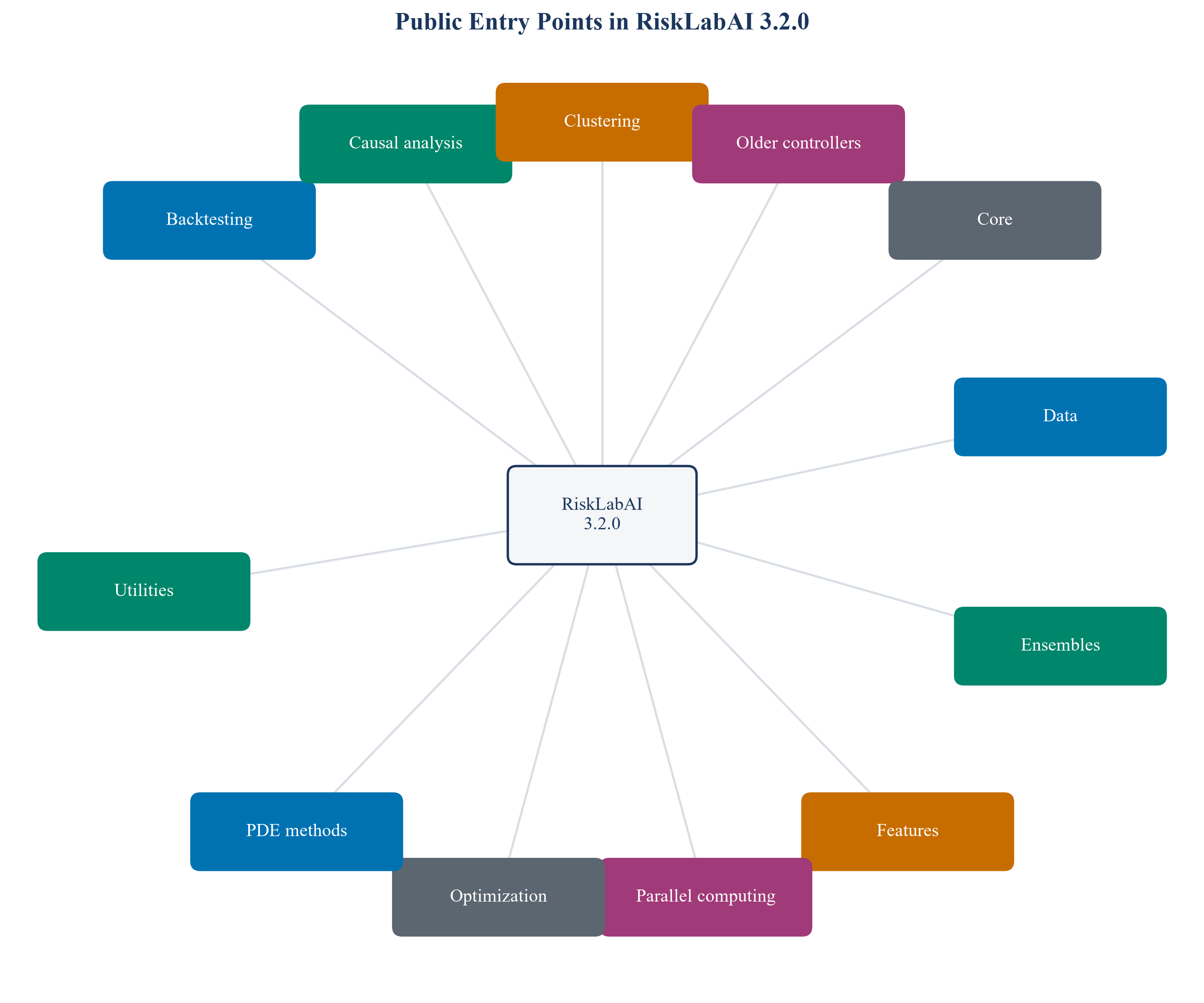
The topology groups public modules by responsibility and shows the main direction of use between them without exposing private research code.
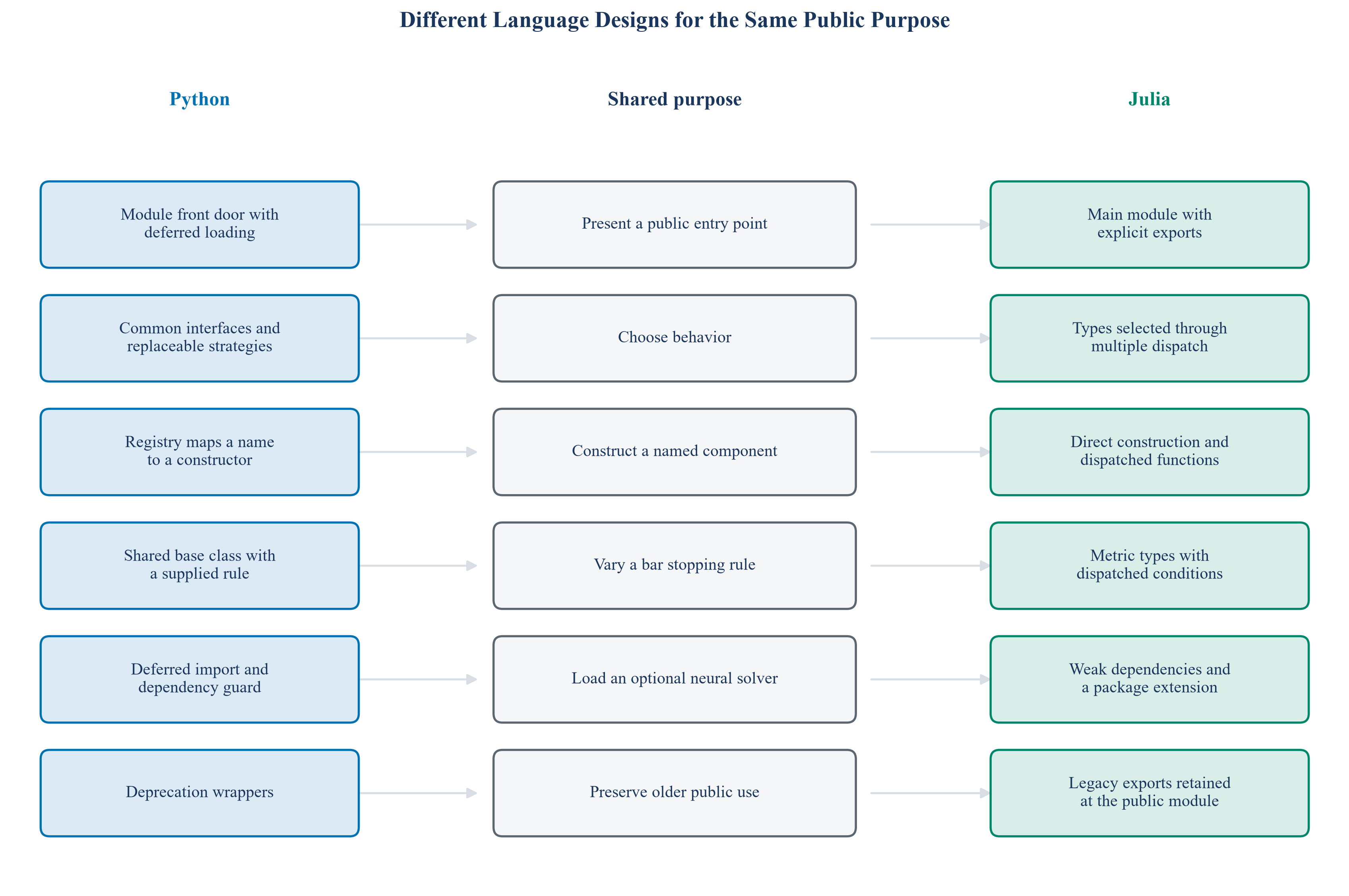
Python and Julia can express the same purpose through different language conventions. The map compares responsibilities rather than requiring identical source structure.
The appendix describes the released public packages. Optional dependencies and deferred Julia coverage remain explicit, and private research methods are outside its scope.
Notebooks
| 1. Organizing the public Python library |
| 2. Choosing and replacing Python components |
| 3. Expressing the same purpose in Python and Julia |